Research
Our research entails multiple lines of work, from atoms in a simulation cell to ceramic fibers out of the furnace.
Computation
Computational investigation of the polymer-to-ceramic route
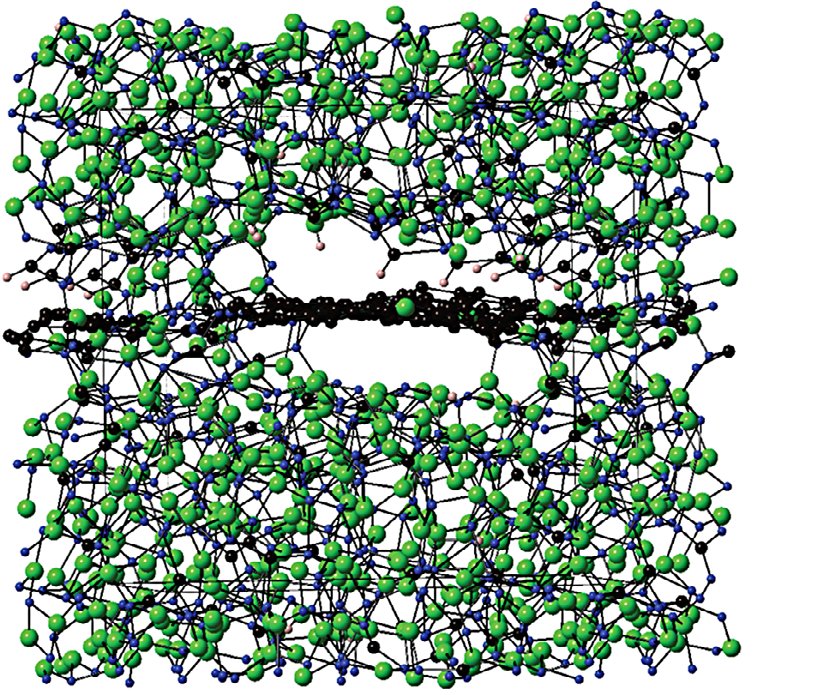
We develop machine-learning interatomic potentials (MLIPs) and apply them to follow how preceramic polymers turn into ceramics. Our Si–C–O–H and Si–C–N–H potentials simulate pyrolysis up to 2,500 K and predict diffusion, thermal expansion and fracture of the resulting ceramics.
Carbon segregations in polymer-derived ceramics
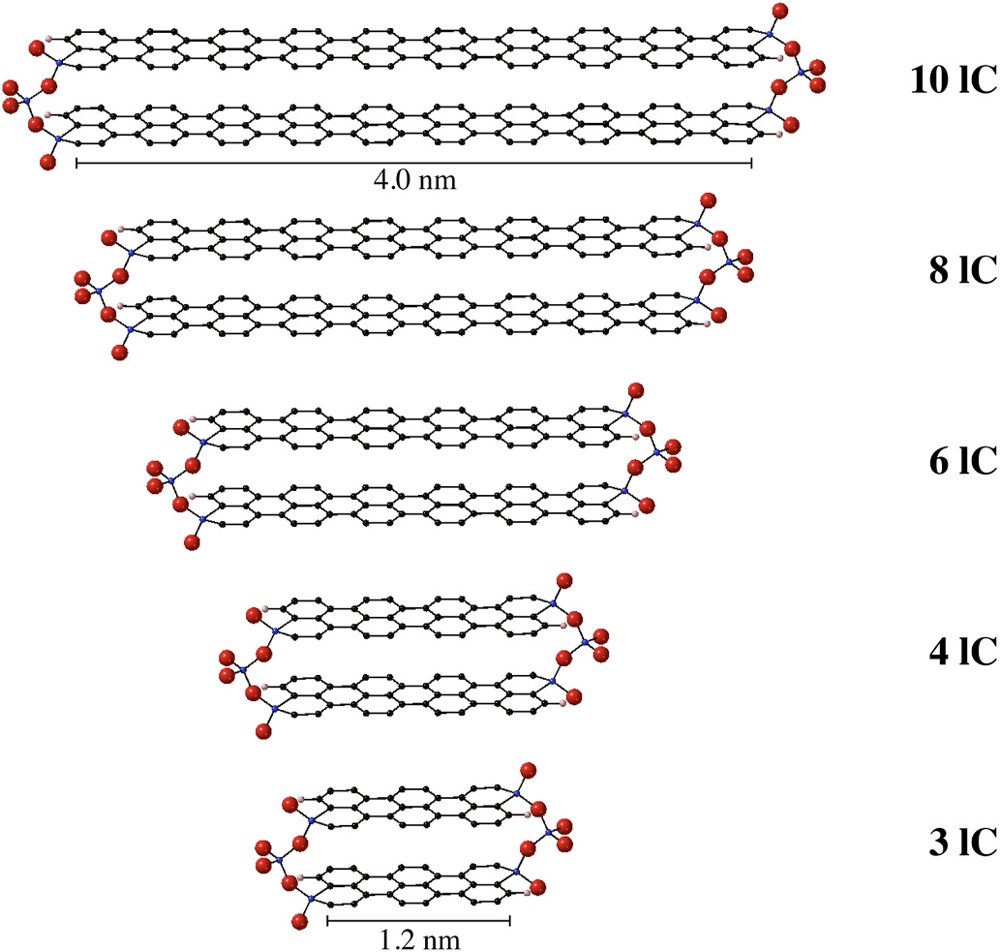
Polymer-derived ceramics often contain nanometre-sized domains of “free” carbon that control stiffness, conductivity and the Raman spectrum. We compute how composition, density and carbon morphology set the elastic moduli, how Raman bands change with flake size, and how strongly graphene adheres to the embedding host matrix.
High-pressure phase diagrams and new compounds
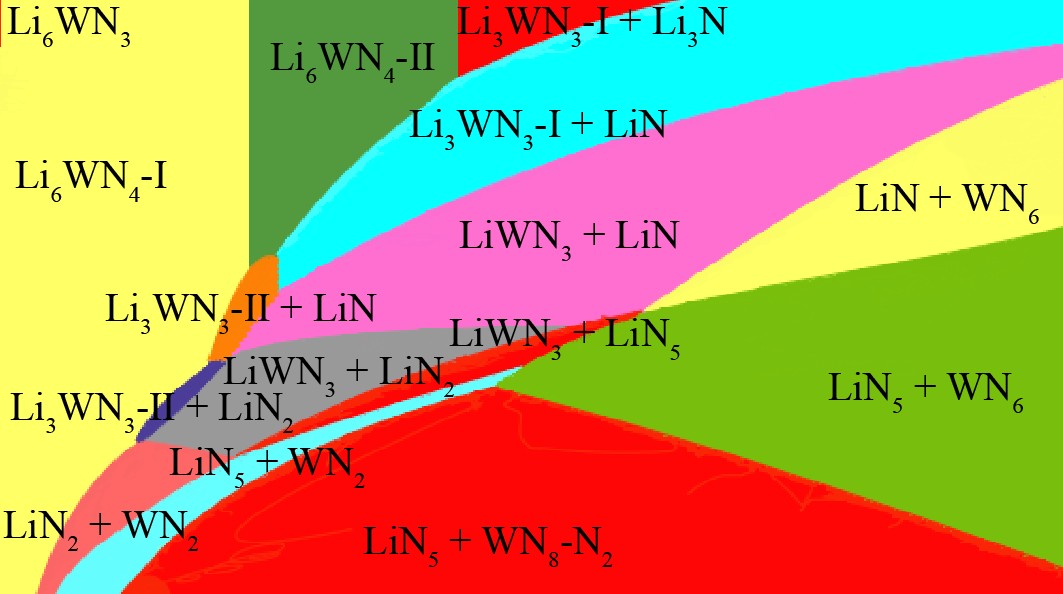
Density functional theory calculations help us to predict which phases appear at extreme pressure and temperature. We computed nitrogen-rich phase diagrams for various metal–nitrogen systems, recently predicted a new spinel-type Al₄C₃ to appear above 7 GPa, and work with partners who make new materials in high-pressure experiments.
Experiment
Pyrolysis in the lab: gels, gases and kinetics
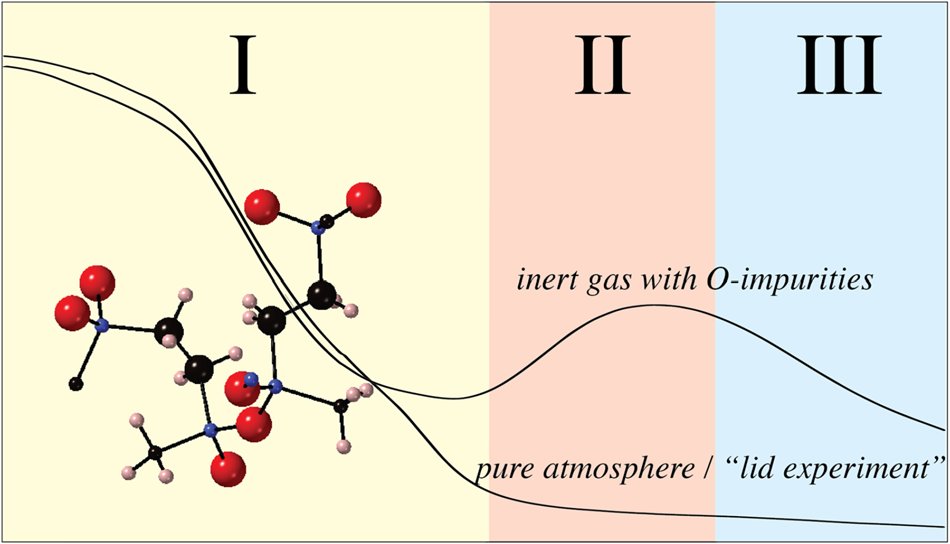
We follow the conversion of gels and polymers to ceramics with thermogravimetry, mass spectrometry and IR spectroscopy. One porous SiCO gel proved hyper-reactive by picking up trace oxygen from 99.999% argon, with a whopping 4% mass gain. Moreover, semiquantitative TG-MS lets us reconstruct a gel’s composition from the gases it releases.
Porous silicon oxycarbide and aerogels
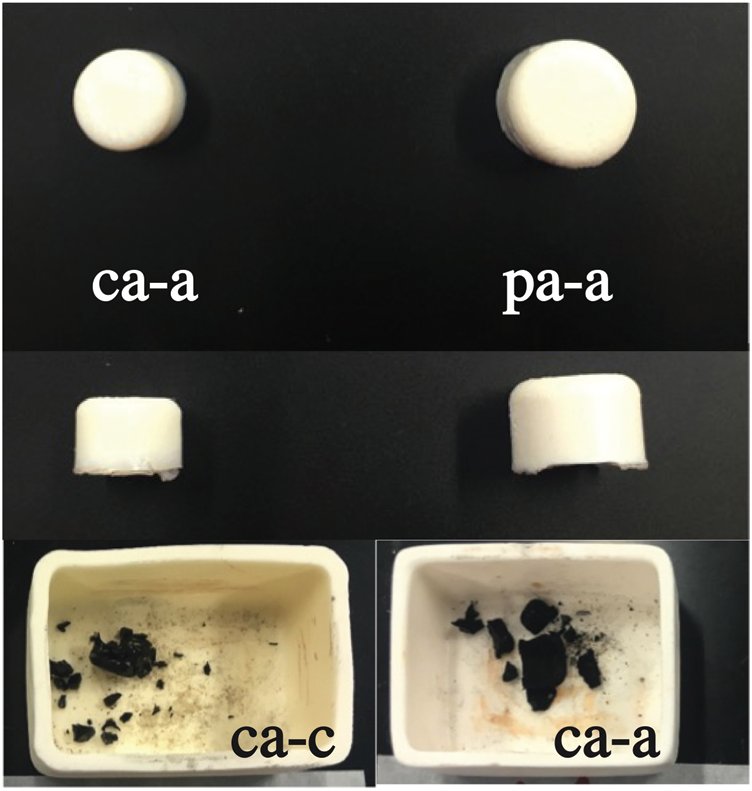
The solvent and the cross-linker decide how pores form in polymer-derived SiCO aerogels. We synthesize polymethylhydrosiloxane gels and, together with Micromeritics, developed differential hysteresis scanning of gas sorption to map how the pores are connected.
Polymer-derived ultra-high-temperature ceramics
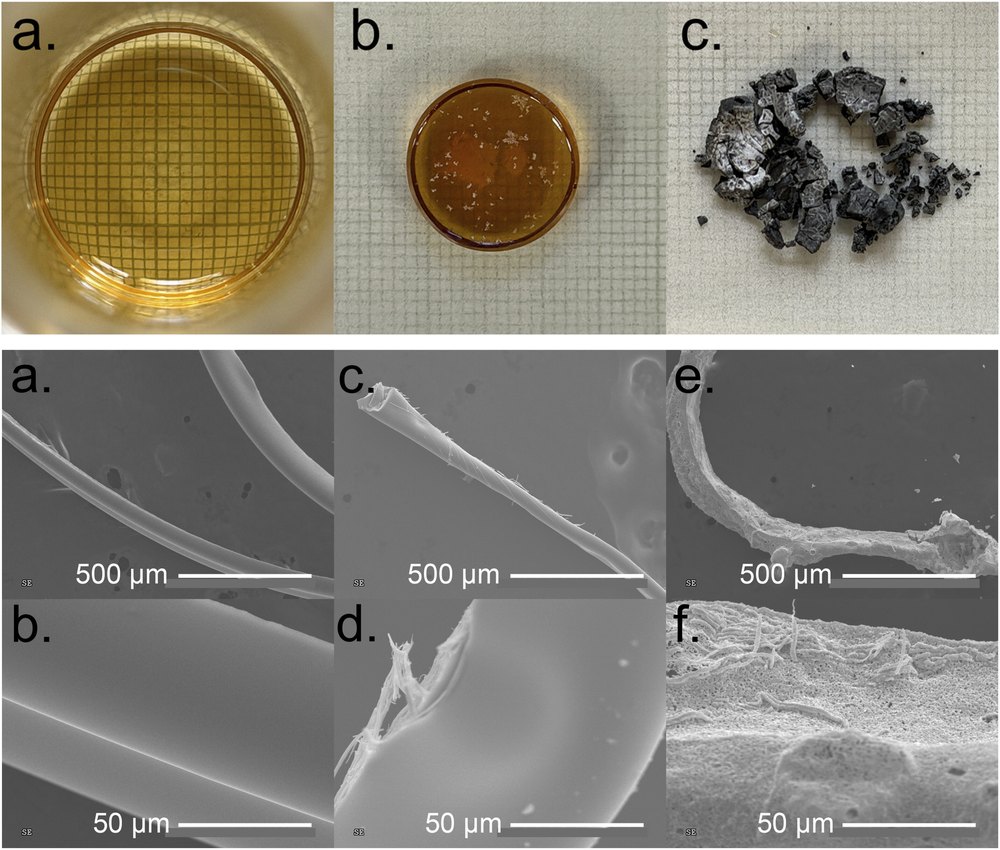
Hafnium- and zirconium-based ceramics withstand temperatures above 2,000 °C and are candidates for hypersonic flight. Cross-linking the commercial precursor SHP-199 with TEOS, we make HfSiCO monoliths and fibers with 92% ceramic yield that remain intact up to 1,600 °C.